

A sunrise balloon ride over Cappadocia, a morning among the ruins of Ephesus, and dinner beside the Bosphorus can all belong to the same trip. That is the appeal of Turkey travel – few destinations bring together ancient cities, dramatic landscapes, Mediterranean coastlines, and living cultural traditions with such variety. The challenge is not finding worthwhile places to visit. It is choosing the right route, pace, and travel style for the time you have.
For US travelers planning a multi-day journey, Turkey rewards an organized itinerary. Its headline destinations are spread across a large country, and the best experience often combines private transfers, domestic flights, thoughtfully located hotels, and an expert guide who can give each site its proper context. A well-planned tour turns a long list of landmarks into a trip that feels connected rather than rushed.
Turkey Travel Starts With the Right Route
Turkey is not a destination best understood through one city alone. Istanbul can easily fill several days, but it is only the opening chapter. The fairy chimneys of Cappadocia lie in central Anatolia, Ephesus is near the Aegean coast, Pamukkale is inland from Izmir, and Antalya and Bodrum offer a different rhythm along the Mediterranean and Aegean shores.
For many first-time visitors, a 7- to 10-day itinerary provides the strongest balance. Istanbul, Cappadocia, Ephesus, and Pamukkale make a classic route because each destination offers a distinct experience: imperial history, volcanic landscapes, Greco-Roman archaeology, and mineral terraces. Add Antalya for coastal scenery or Gallipoli and Troy for a deeper look at the Dardanelles region when you have more time.
Trying to cover every region in a week usually creates too many hotel changes and long driving days. Turkey is worth lingering in. A focused itinerary with three or four major stops often feels more rewarding than a fast circuit with six.
A Practical First-Time Itinerary
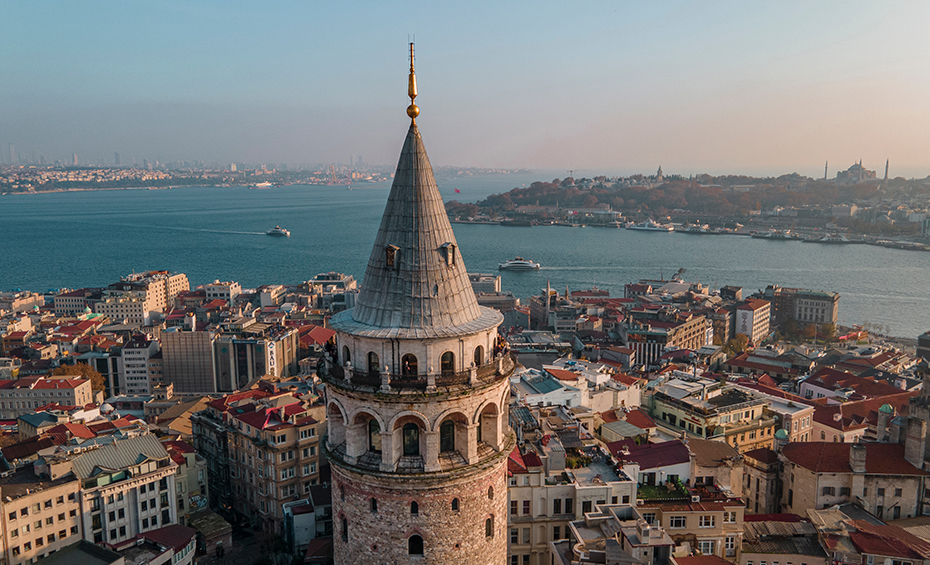
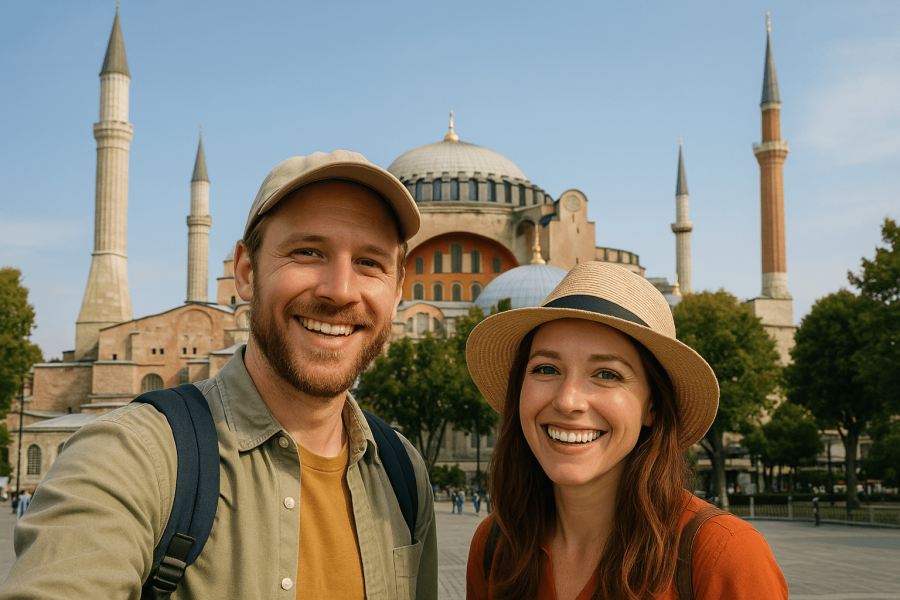
Start in Istanbul, where the Blue Mosque, Hagia Sophia, Topkapi Palace, Grand Bazaar, and Bosphorus Strait reveal the layers of Byzantine and Ottoman history. Plan at least two full sightseeing days. Travelers arriving from the US may also appreciate a lighter first day to adjust after an overnight flight.
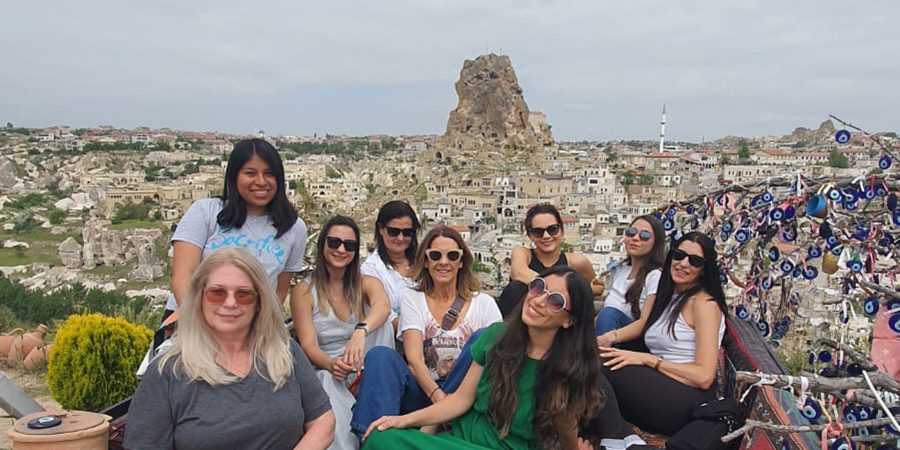
From Istanbul, a domestic flight to Cappadocia saves considerable time. Spend two nights in the region to see the Goreme Open-Air Museum, underground cities, and valleys shaped by centuries of wind and water. A hot air balloon flight is weather-dependent, so an extra morning gives you a better chance of flying if conditions cause a cancellation.
Continue by flight or a well-timed transfer toward the Aegean region. Ephesus deserves more than a quick stop: its marble streets, Library of Celsus, Great Theater, and terrace houses offer one of the world’s most impressive ancient city experiences. Nearby sites such as the House of Virgin Mary, the Basilica of St. John, and the Temple of Artemis add further historical and religious significance.
Pamukkale pairs naturally with Ephesus. The white travertine terraces are striking, but the ancient city of Hierapolis is equally important. Walking through its necropolis, theater, and thermal remains gives the landscape depth beyond its famous photographs.
Choose a Tour Style That Fits Your Trip
The most suitable Turkey itinerary depends on how you like to travel. Private tours are ideal for couples, families, and small parties who want control over timing, hotel preferences, and the pace at each stop. They work especially well for travelers who would like to add destinations, arrange specific dining requests, or build in free time.
Small group tours offer a structured route with shared transportation and guided sightseeing. They are a strong choice for travelers who enjoy meeting fellow guests while keeping logistics simple. Fixed departure programs can also provide clear planning from the start, particularly when domestic flights and airport transfers are included.
Shorter travel needs call for a different approach. Cruise passengers docking in Kusadasi can visit Ephesus on a focused shore excursion, while ships arriving in Bodrum can pair local highlights with coastal scenery. Travelers with a long Istanbul layover may be able to see major landmarks without committing to a full overnight stay, depending on flight schedules, traffic, and visa requirements.
The best choice is not always the most packed schedule. Consider your energy level, interests, and how much independence you want between guided visits. A traveler fascinated by archaeology may want more time at Ephesus and Aphrodisias. A couple celebrating a special occasion may prioritize a cave hotel in Cappadocia and a relaxed Bosphorus evening. Families may prefer shorter transfer days and hands-on cultural experiences.
Build Around the Experiences That Matter Most
Turkey’s greatest strength is range. History-focused travelers can trace civilizations from the Hittites and Greeks to Romans, Byzantines, Seljuks, and Ottomans. Religious travelers can follow the footsteps of St. Paul, visit the Seven Churches of Revelation, and spend time at places tied to early Christianity. Food-focused visitors can move from Istanbul’s markets and meze tables to Cappadocia’s regional wines, Gaziantep’s rich culinary traditions, and Aegean olive oil cuisine.
This is why a generic route is rarely the final answer. Begin with your priorities, then shape the itinerary around them. If biblical history is central, destinations such as Ephesus, Smyrna, Pergamum, Sardis, Philadelphia, Laodicea, and Hierapolis deserve careful sequencing. If the coast is the goal, Antalya, Fethiye, Bodrum, and the turquoise waters of the southwest may take precedence over inland sites.
A combined Greece and Turkey journey can also be an excellent option for travelers interested in classical history or early Christian heritage. It requires more coordination than a single-country itinerary, but it connects major archaeological settings across the Aegean and makes particularly good sense for longer vacations.
Plan Logistics Before You Fall in Love With the Map
The difference between an enjoyable Turkey trip and an exhausting one often comes down to transportation. Domestic flights are especially useful for connecting Istanbul, Cappadocia, Izmir, Antalya, and other distant regions. They protect sightseeing time and reduce the fatigue that comes with long cross-country drives.
Road travel still has an important role. Scenic routes and smaller archaeological sites are often best reached by private vehicle, and driving between Ephesus and Pamukkale is practical when planned with a guide and appropriate stops. The key is to use road travel where it adds value, not simply because two destinations appear close together on a map.
Hotel location matters as well. In Istanbul, staying near the Old City is convenient for first-time sightseeing, while areas near the Bosphorus offer a different atmosphere. In Cappadocia, cave hotels provide a memorable setting, but travelers should consider stairs, room layouts, and accessibility needs before booking. A beautiful property is only a good fit if it supports your comfort.
Season affects the rhythm of the journey. Spring and fall are often ideal for broad itineraries, with pleasant temperatures for outdoor sites. Summer is excellent for coastal stays but can be hot at exposed archaeological locations such as Ephesus and Pamukkale. Winter brings fewer crowds and a more atmospheric Istanbul, while Cappadocia can be especially beautiful under snow, though balloon flights and road conditions remain weather-dependent.
Why Expert Guidance Changes the Experience
At major sites, a guide does far more than point out a monument. The ruins of Ephesus become clearer when you understand how its harbor shaped trade, why its theater mattered, and how daily life unfolded along the Curetes Street. Istanbul’s landmarks gain meaning when Byzantine and Ottoman history are placed side by side rather than treated as separate attractions.
Guidance also supports better pacing. It helps travelers avoid unnecessary backtracking, arrive at popular sites at more favorable times, and make informed choices when weather, flight schedules, or local conditions require an adjustment. That reassurance is valuable when coordinating several hotels, flights, transfers, and visits across multiple regions.
Smart Turkey Tours creates curated private, small group, package, biblical, and shore excursion programs for travelers who want iconic destinations handled with care while retaining room for personal preferences. The goal is not to fill every hour. It is to make every stop count.
Turkey rewards travelers who plan with intention. Leave enough time to pause over tea with a Bosphorus view, watch the light change across Cappadocia’s valleys, and stand quietly in places where centuries of history remain visible under your feet. Those unhurried moments are often the ones you remember long after the itinerary ends.