

Trying to piece together Istanbul, Cappadocia, Ephesus, Pamukkale, and the coast on your own usually sounds exciting right up until you start comparing flight times, hotel locations, transfer schedules, and museum days. That is exactly why Turkey tour packages appeal to so many US travelers. They turn a complex, multi-stop trip into a well-paced experience with the major details already organized, while still leaving room for personal interests, preferred travel style, and trip length.
Turkey is not a one-city destination. Most travelers want a combination of imperial history in Istanbul, surreal landscapes in Cappadocia, classical ruins in Ephesus, thermal terraces in Pamukkale, and often a coastal or biblical extension. The challenge is not deciding whether these places are worth seeing. The challenge is fitting them together in a way that feels efficient rather than rushed. A strong package does that work upfront.
What Good Turkey Tour Packages Actually Include
The best packages are not just hotel and sightseeing bundles. They are itinerary frameworks designed around geography, timing, and traveler priorities. In practical terms, that often means airport transfers, domestic flights, guided touring, entrance arrangements, hotel stays, and day-by-day planning that reduces wasted travel time.
That matters more in Turkey than many first-time visitors expect. Distances between major regions are significant, and a trip that looks simple on a map can become tiring if every segment has to be managed separately. When domestic flights are built into the program and sightseeing is grouped intelligently, travelers can spend more time at landmarks and less time solving logistics.
There is also a difference between a package that is merely fixed and one that is thoughtfully structured. The stronger option gives you a clear route while still allowing choices around hotel category, private versus small group touring, added nights, and special-interest stops.
Choosing Turkey Tour Packages by Travel Style
Not every traveler wants the same pace or level of service, so the right package starts with how you prefer to travel.
Private tours for flexibility
Private touring is usually the best fit for couples, families, and small parties who want control over the daily rhythm. You still follow an organized route, but the experience feels more personal. Guides can spend more time on the sites that matter most to you, whether that is Byzantine history in Istanbul, early Christianity in Ephesus, or underground cities in Cappadocia.
Private packages also work well for travelers who want premium comfort without having to design the trip from scratch. You get structure, but not the stop-and-go feel that sometimes comes with larger groups.
Small group tours for value and shared experience
Small group options are ideal for travelers who want a guided program at a more moderate price point. They can be a smart choice for first-time visitors who appreciate a social setting and do not mind following a set schedule.
The trade-off is flexibility. Group departures typically run on fixed dates and fixed sightseeing flow. For many travelers that is perfectly fine, especially when the itinerary covers the major highlights efficiently.
Package tours for multi-city convenience
If your goal is to see the iconic destinations in one trip without building each leg individually, package tours are often the most practical option. They work especially well for 5- to 10-day journeys that combine flights, hotels, and guided touring into one coordinated plan.
For US-based travelers with limited vacation time, this is often the difference between seeing two places and seeing five.
The Most Popular Destinations in Turkey Tour Packages
A well-built itinerary usually combines variety. Turkey rewards travelers who mix cities, archaeology, landscapes, and coastal or religious heritage.
Istanbul
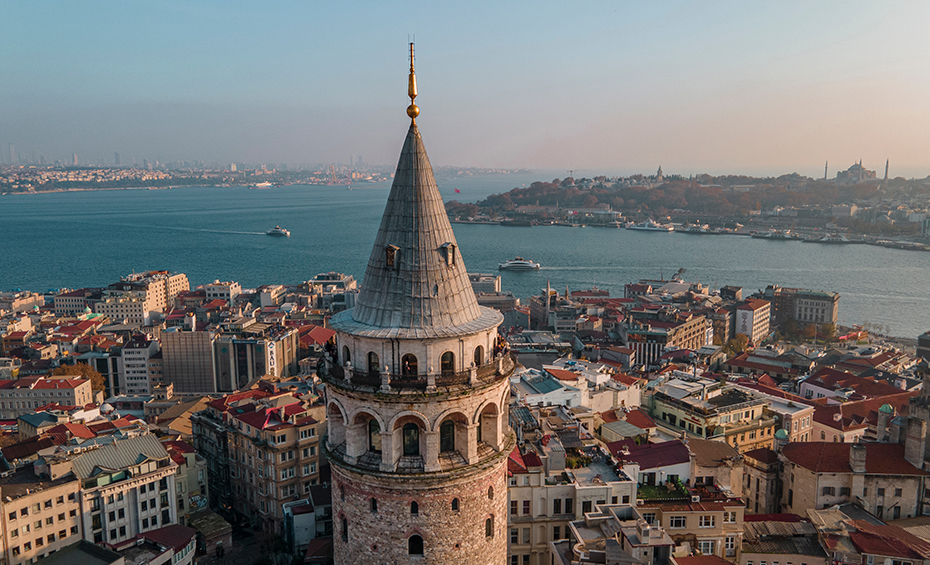
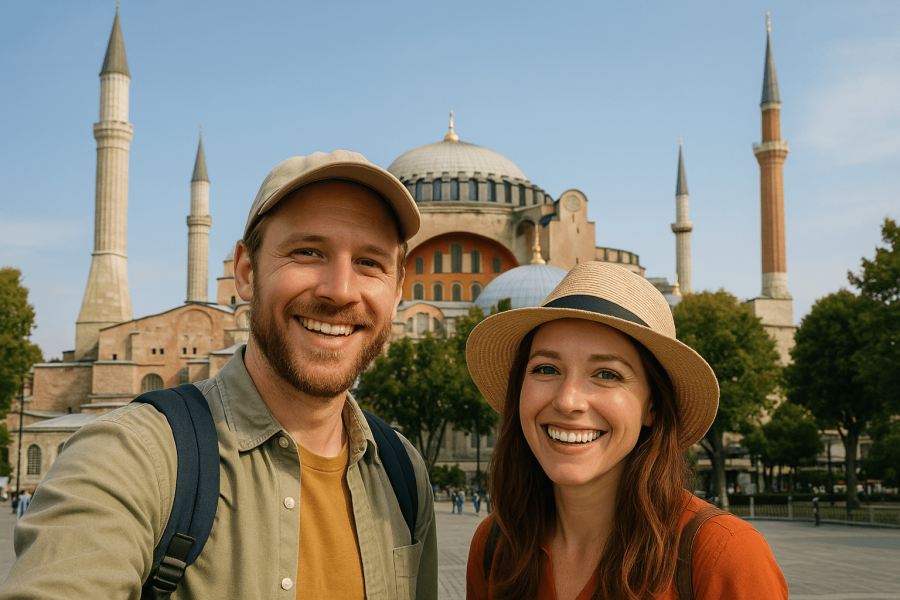
Most journeys begin in Istanbul, and for good reason. It is the country’s cultural crossroads, where Ottoman, Byzantine, and modern Turkish life meet in a single skyline. Packages here often include Hagia Sophia, Blue Mosque, Topkapi Palace, Hippodrome, Basilica Cistern, and the Grand Bazaar, sometimes with a Bosphorus cruise added for a broader sense of the city.
Two or three nights is usually the minimum. Less than that can feel compressed, especially after a long international flight.
Cappadocia
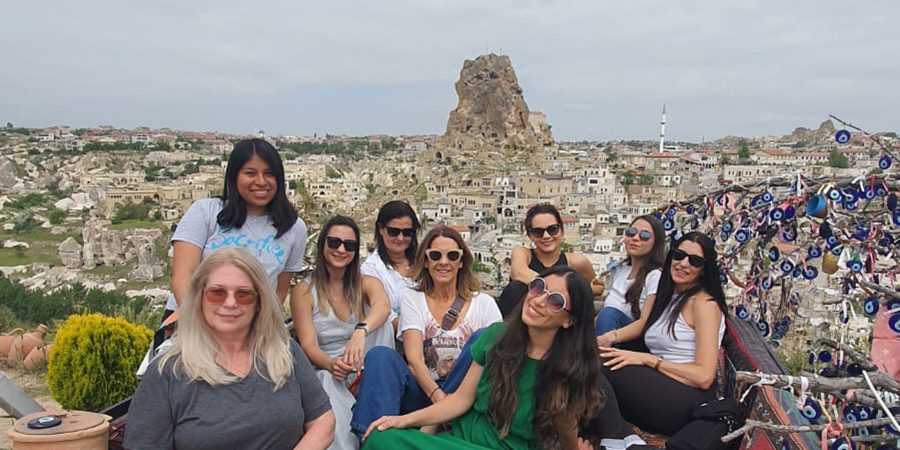
Cappadocia brings a completely different side of Turkey – rock-cut churches, cave dwellings, fairy chimneys, and broad volcanic valleys. It pairs well with Istanbul because the contrast is so strong. Many packages include Goreme Open-Air Museum, Devrent Valley, Pasabag, underground cities, and panoramic viewpoints.
If a hot air balloon ride is important to you, timing matters. Weather can affect flights, so an extra night in Cappadocia gives you a better chance than a very tight schedule.
Ephesus and Kusadasi
Ephesus is one of the most important ancient cities in the eastern Mediterranean and a major priority for history-focused travelers. Tour packages often pair it with Kusadasi or Selcuk for overnight stays, making it easy to include the Library of Celsus, Great Theatre, Temple of Artemis area, and the House of Virgin Mary.
This region is also a strong match for cruise passengers and faith-based travelers. If biblical history is central to your trip, this stop often becomes one of the most meaningful.
Pamukkale
Pamukkale adds a natural wonder to the itinerary, along with the ancient city of Hierapolis. It is one of the easiest places to underestimate in photos and one of the easiest to remember after you have seen it in person. White travertine terraces, mineral-rich thermal pools, and Roman remains create a stop that feels distinct from everything else in the country.
It is often included as a transition point between the Aegean region and inland destinations.
Gallipoli, Troy, Antalya, Bodrum, and Mesopotamia
These destinations are usually added based on interest. Gallipoli and Troy appeal to military history and classical history travelers. Antalya and Bodrum bring in the Mediterranean coast. Mesopotamia is ideal for those looking beyond the standard route and into southeastern Turkey’s deeper historical layers.
This is where customization starts to matter. A traveler focused on archaeology may build a very different itinerary from one planning a cultural vacation with beach time.
How Long Should a Turkey Package Be?
Trip length changes the quality of the experience more than many travelers realize. A four-day program can work for Istanbul only, a quick Cappadocia add-on, or a focused shore excursion extension. But once you want Istanbul, Cappadocia, and Ephesus together, five to seven days becomes a more realistic baseline.
For travelers who want a fuller introduction to Turkey, seven to ten days is often the sweet spot. That allows time for Istanbul, Cappadocia, Ephesus, and Pamukkale without turning every day into a transfer day. If you are adding Gallipoli, the Mediterranean coast, or biblical sites, ten days or more is usually the better fit.
There is no single perfect duration. The right answer depends on whether you want a highlights trip or a broader regional journey. What matters is matching the route to the number of days instead of forcing too many destinations into too little time.
When to Choose Custom Turkey Tour Packages
Ready-made itineraries are useful because they simplify comparison. You can quickly see durations, route combinations, and price starting points. But customization becomes valuable when your trip includes special priorities.
That might mean a private biblical tour covering the Seven Churches, a layover tour from Istanbul Airport, a family trip with a slower pace, or a Turkey and Greece combination itinerary. Cruise travelers also benefit from tailored planning, especially when they need port-based shore excursions from Kusadasi or Bodrum that align precisely with ship schedules.
This is one of the biggest advantages of working with a destination specialist rather than trying to assemble every component independently. The itinerary can stay structured without feeling generic.
What US Travelers Should Look for Before Booking
The most useful question is not simply, “What is included?” It is, “How well does this itinerary fit the way I travel?” A lower starting price may sound attractive, but it is worth checking hotel category, flight inclusion, transfer coverage, guide format, and how much free time is built into the route.
Some travelers want every major site guided. Others prefer guided touring in key destinations and more flexibility in the evenings. Some want the efficiency of domestic flights; others are comfortable with longer overland travel if it reduces cost. These are practical trade-offs, not minor details.
It also helps to look at how clearly the itinerary is organized. If the route, inclusions, and destination flow are easy to understand, the trip itself is usually managed with the same level of clarity. That is especially important in a country where multi-city planning can become complicated fast.
For travelers who want the iconic highlights of Turkey without the stress of coordinating each stop, Smart Turkey Tours and similar destination-focused operators provide a much more manageable path from initial idea to booked journey.
The right package should feel like expert planning that saves you time, reduces friction, and still leaves space for the moments you will remember most – sunrise in Cappadocia, a quiet corner of Hagia Sophia, the marble streets of Ephesus, or the white terraces of Pamukkale under the afternoon light.