
A well-designed pamukkale and ephesus tour gives you two very different sides of western Turkey in one trip. One is shaped by nature – white travertine terraces, thermal waters, and broad valley views. The other is one of the most important ancient cities in the Mediterranean, where temples, streets, libraries, and early Christian heritage still speak clearly to modern visitors. Put together, they create a rewarding itinerary, but only if the route, timing, and pace are planned properly.
For many US travelers, the challenge is not deciding whether Pamukkale and Ephesus are worth seeing. It is figuring out how to connect them without wasting time on transfers, missing the best hours at the sites, or trying to fit too much into a rushed day. That is where a structured tour makes a real difference.
Why choose a Pamukkale and Ephesus tour?
These two destinations complement each other unusually well. Ephesus delivers history, archaeology, and biblical significance. Pamukkale adds natural scenery, the ancient spa city of Hierapolis, and a lighter change of pace after a dense historical visit. If your goal is to experience Turkey beyond Istanbul and Cappadocia, this pairing is one of the strongest combinations available.
There is also a practical reason they are often booked together. Both are accessible from the Aegean region, and both fit neatly into broader Turkey itineraries that may include Istanbul, Kusadasi, Izmir, or even a cruise stop. Travelers who want a short but meaningful extension to their main trip often find that this route offers a lot of value in one or two days.
The trade-off is distance and pacing. While the region is well connected, Ephesus and Pamukkale are not side-by-side attractions you casually combine without planning. A private tour, small group program, or overnight package usually works better than trying to arrange every transfer independently.
What you will see on a Pamukkale and Ephesus tour
Ephesus highlights
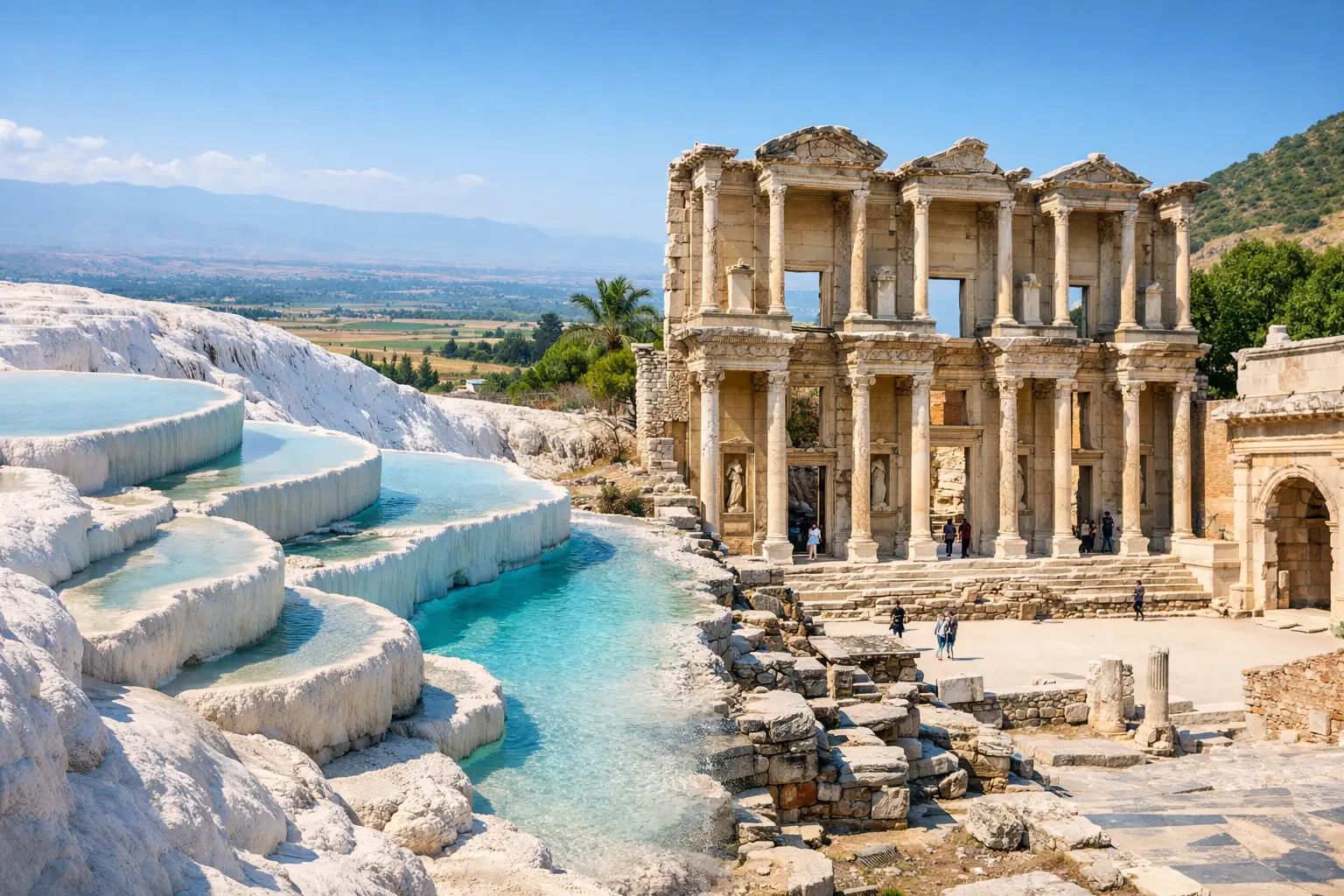
Ephesus is one of Turkey’s standout archaeological sites for good reason. Visitors typically walk along Curetes Street, see the grand facade of the Library of Celsus, and stand in the Great Theater, where the scale of the ancient city becomes easy to understand. The site is visually impressive, but it also rewards travelers who want context. Roman urban life, trade, religion, and early Christianity all intersect here.
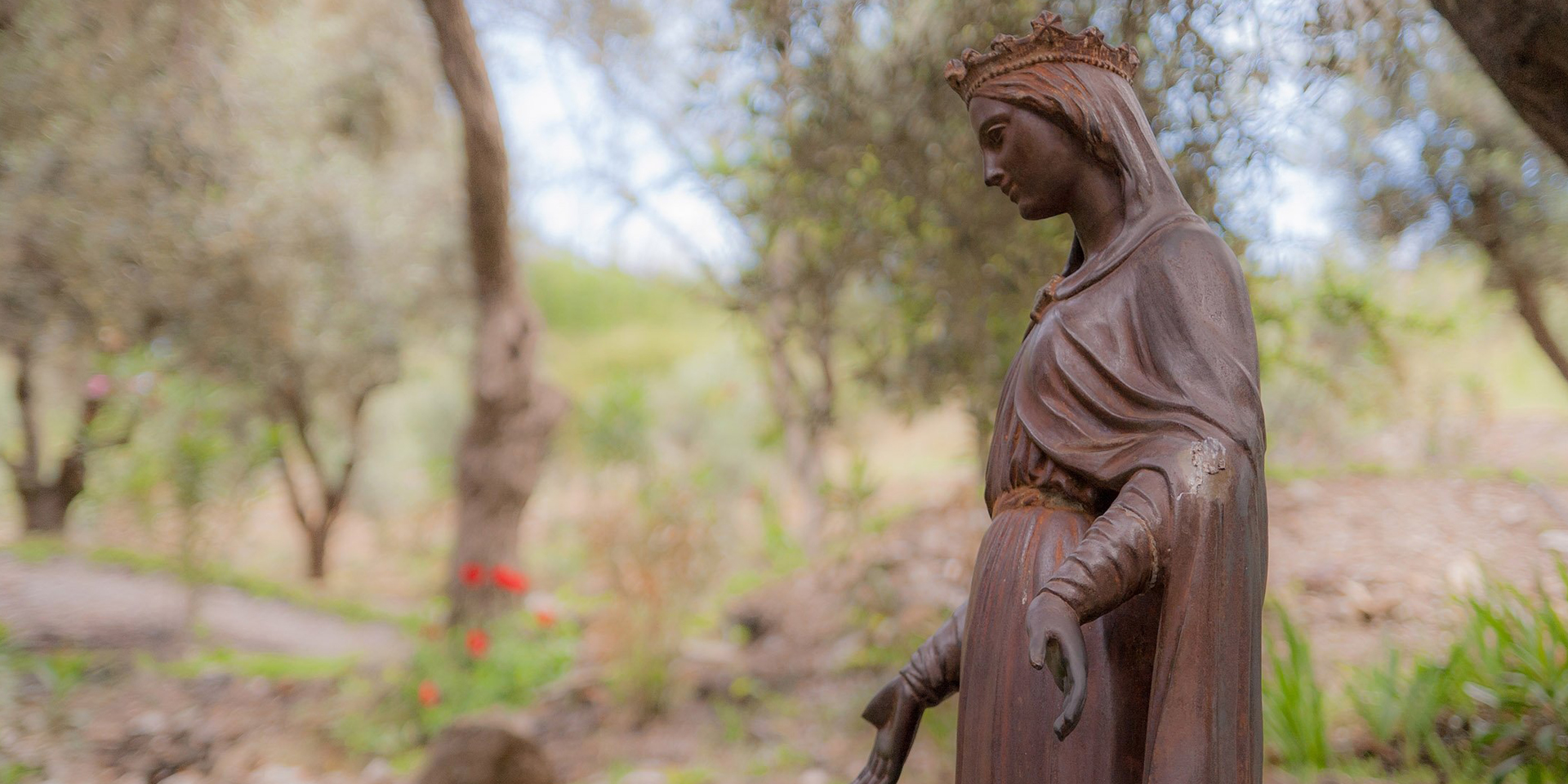
Many itineraries also include the House of Virgin Mary, a meaningful stop for Christian travelers, and the Temple of Artemis area, which connects the city to one of the Seven Wonders of the Ancient World. Depending on timing, some tours add the Ephesus Terrace Houses or the Basilica of St. John. These additions can deepen the experience, especially for guests with a strong interest in religion or ancient daily life.
Pamukkale and Hierapolis highlights
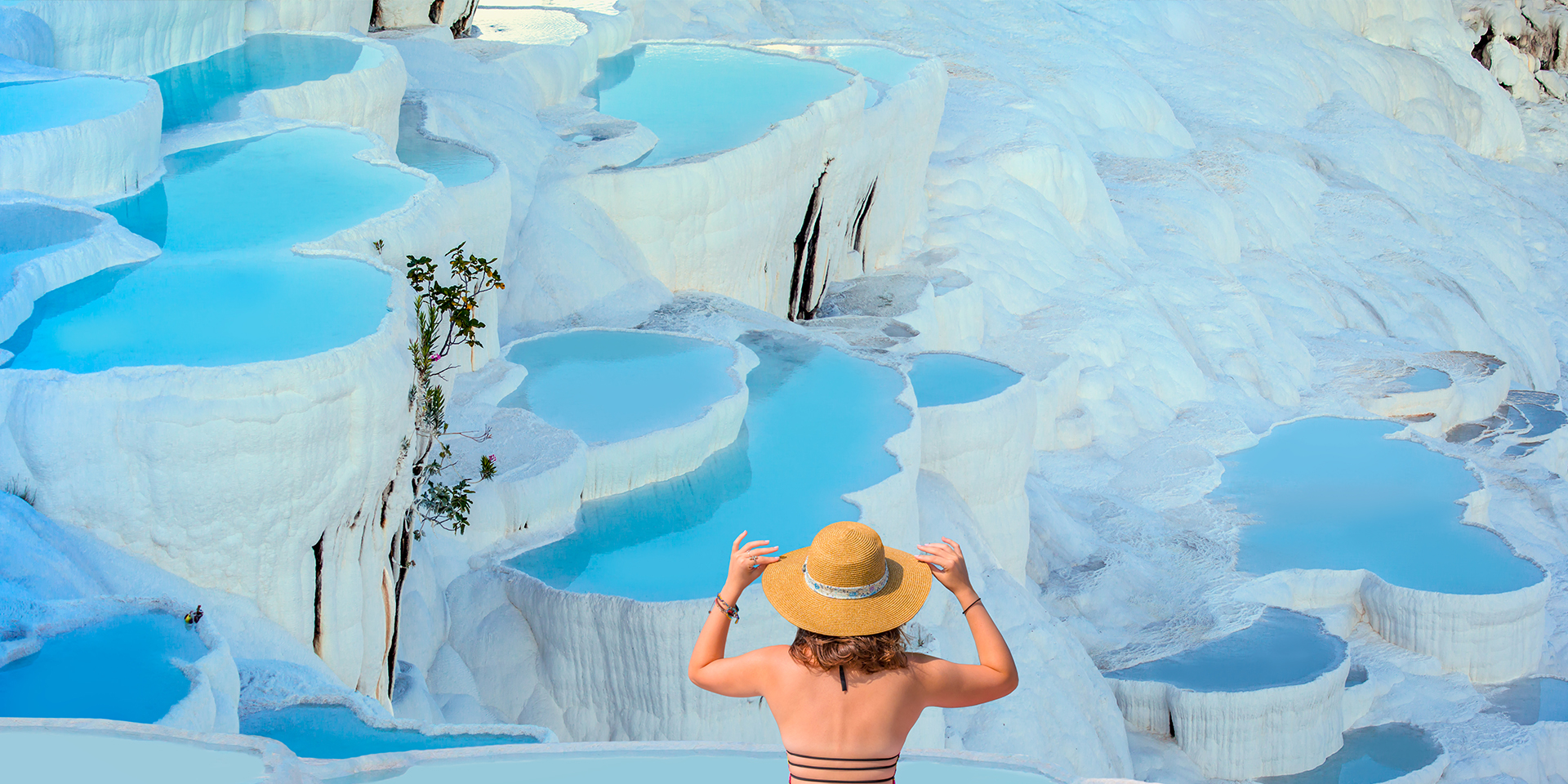
Pamukkale is known first for its white calcium terraces, but the site is more than a photo stop. The thermal waters created a destination that has attracted visitors for centuries, and the ancient city of Hierapolis grew around those natural features. A quality tour includes both elements rather than treating Pamukkale as scenery only.
At Hierapolis, travelers usually see the necropolis, ancient streets, city gates, and the remarkably preserved theater. Some itineraries allow time for the Cleopatra Antique Pool, where guests can swim among submerged ancient columns if they choose. That option depends on season, crowd levels, and personal preference. Some travelers love the chance to relax there, while others prefer to spend more time walking the site.
One day or two days?
This is one of the most important planning decisions.
A one-day pamukkale and ephesus tour can work for travelers based in Kusadasi, Selcuk, or Izmir who are comfortable with an early start and a long sightseeing day. It is efficient, and for some cruise guests or short-stay visitors, efficiency is the priority. If your schedule is tight, this format can still deliver a very satisfying experience, especially with a private guide and driver who keep the day moving smoothly.
That said, two days is usually the better choice for travelers who want a more relaxed pace. Ephesus deserves time, especially if you want to include the House of Virgin Mary or biblical elements. Pamukkale is also more enjoyable when you are not rushing through the terraces simply to stay on schedule. An overnight format reduces road fatigue and gives each destination room to breathe.
The right answer depends on your larger trip. If Turkey is one stop on a longer Mediterranean vacation, one day may be the practical fit. If Turkey is your main destination, giving these sites two days often improves the overall experience.
Who benefits most from this tour style?
This route appeals to several types of travelers. Couples often like the balance of scenic beauty and major history. Families appreciate having a mix of open-air ruins and visually striking landscapes rather than a history-only day. Faith-based travelers are drawn to Ephesus for its biblical connections and often combine it with broader Seven Churches or Christian heritage itineraries.
Cruise passengers from Kusadasi also frequently look for this combination, but timing matters more in that case. A same-day shore excursion must be carefully managed around port hours. Multi-day land travelers have more flexibility and usually more room for custom additions.
How transportation affects the experience
On paper, western Turkey can look easy to piece together. In reality, road times, station transfers, luggage handling, and entrance sequencing can add friction fast. That is why professionally arranged touring is so popular for this route.
A strong itinerary typically coordinates hotel pickup, intercity transport, site entry timing, and guiding into one clean plan. If domestic flights are part of a larger package, that makes the trip even easier for US travelers who want to cover more of Turkey without losing days to logistics. Smart Turkey Tours, for example, focuses on this kind of organized, flexible planning, which is especially valuable when combining major destinations.
Private touring offers the most control. You can move faster, slow down when needed, and shape the day around your interests. Small group tours offer a more budget-conscious option and still remove the burden of planning. Neither is universally better. It depends on your budget, travel style, and how much customization matters to you.
Best time to book a Pamukkale and Ephesus tour
Spring and fall are generally the best seasons. The weather is milder, walking conditions are more comfortable, and the sites are easier to enjoy for longer stretches. Summer brings longer daylight hours, which helps with touring, but it also means stronger heat, especially in exposed archaeological areas like Ephesus.
Winter can still work, particularly for travelers who prefer fewer crowds, but conditions are less predictable. Pamukkale remains attractive year-round, yet the feel of the visit changes with weather and water flow. If your priorities are photography, comfortable walking, and a balanced pace, April through June and September through October are often ideal.
What to look for when comparing tours
Not every pamukkale and ephesus tour is built the same. Some focus on speed, some on comfort, and some on specific interests such as biblical travel or private luxury. Before booking, it helps to look closely at what is actually included.
The strongest itineraries clearly state whether the tour is private or shared, whether hotel pickup and drop-off are included, how much guided time you will have inside each site, and whether extras like the House of Virgin Mary or Cleopatra Pool are built into the day. It is also worth checking whether the route starts from Kusadasi, Izmir, Selcuk, or another base, since that changes both timing and value.
Price matters, but structure matters more. A lower-cost option can end up feeling expensive if it cuts key visits short or leaves you managing parts of the day on your own. A well-planned itinerary usually delivers better value because it protects your time as much as your budget.
Making the most of your day on site
Comfort has a direct effect on how much you enjoy these destinations. Wear good walking shoes, bring sun protection, and expect uneven ground at archaeological areas. If you are visiting in warmer months, pace yourself early and keep water with you. For Pamukkale, some areas may require shoes off near the terraces, so practical footwear helps.
It also helps to decide in advance what kind of experience you want. Some travelers want the headline sites and strong photo opportunities. Others want deeper interpretation and more historical context. Sharing that preference before the tour begins often leads to a better day.
A pamukkale and ephesus tour works best when it feels thoughtful rather than rushed. With the right route, expert guidance, and realistic timing, it becomes more than a checklist of famous places. It becomes one of the clearest ways to see how much variety western Turkey can offer in a very short span of time.