
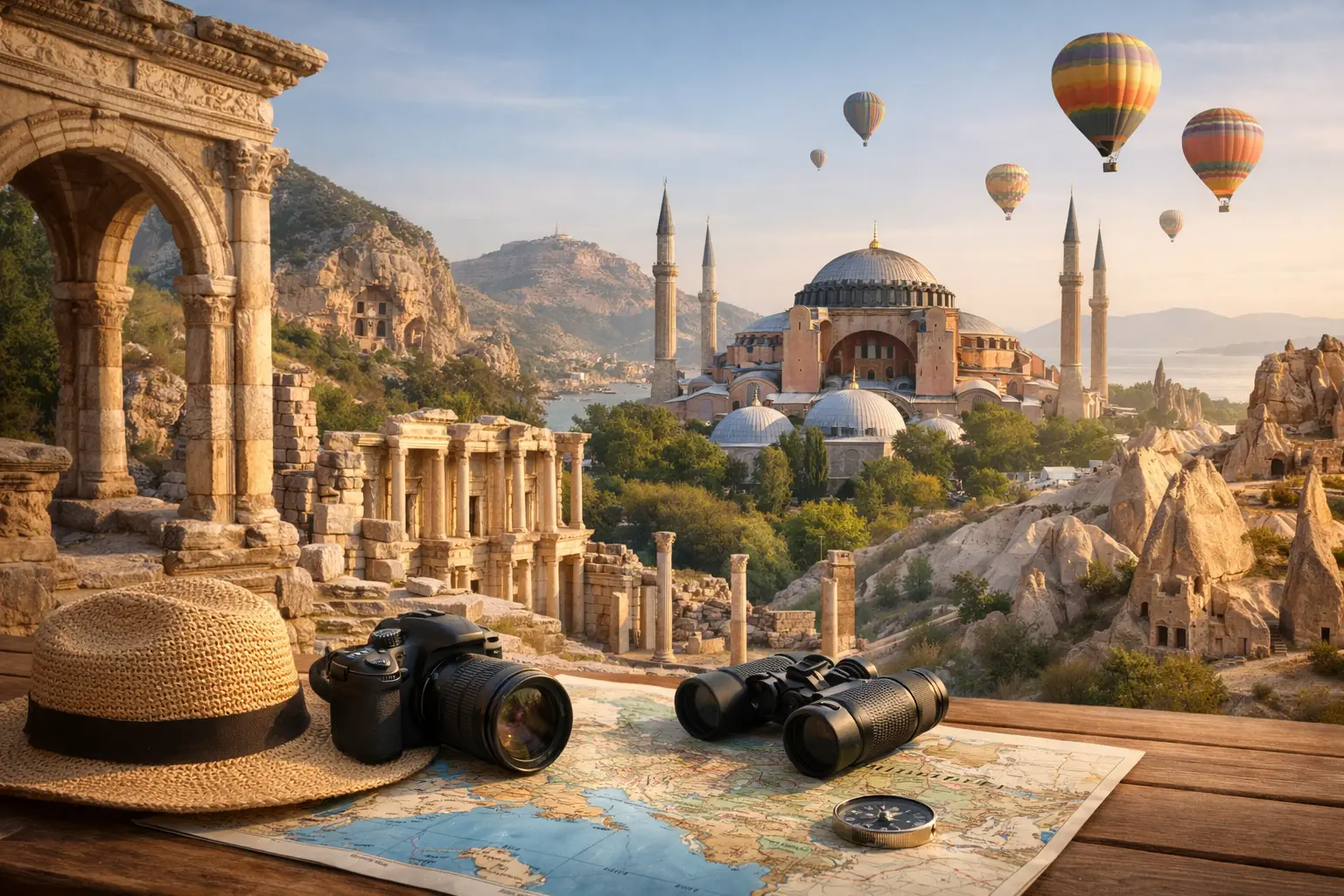
Turkey rewards travelers who follow its history in sequence. One day you can stand beneath the dome of Hagia Sophia, the next walk the battlefields of Gallipoli, and soon after trace Roman streets toward the Library of Celsus in Ephesus. The best turkey heritage routes are designed around those connections, combining major landmarks with sensible travel times, domestic flights, and enough time at each stop to understand what you are seeing.
For most US travelers, the right route depends on trip length and the story they want to follow. A first-time cultural journey should balance Istanbul, ancient western Anatolia, and Cappadocia. Travelers interested in military history will want Gallipoli and Troy. Faith-based groups may place the Seven Churches and St. Paul sites at the center of the itinerary. The key is not trying to see every region in one hurried week.
How to Choose the Best Turkey Heritage Routes
Turkey is large, and its landmark regions are spread across two continents. Istanbul, Gallipoli, Troy, Ephesus, Pamukkale, Cappadocia, and Mesopotamia cannot be treated as stops on a single road trip. The strongest heritage itineraries use domestic flights where they save a full day of driving and group sites that naturally belong together.
Start with the amount of time you have. Seven to nine days is enough for a well-paced introduction to Istanbul, Cappadocia, and Ephesus or Pamukkale. Ten to twelve days allows room for Gallipoli and Troy, while two weeks opens the door to a deeper eastern extension such as Mount Nemrut, Gaziantep, Sanliurfa, or Gobeklitepe.
Your travel style matters as well. Private travelers can adjust museum time, hotel choices, and sightseeing pace around personal interests. Small groups benefit from a planned route and a local guide who can place each monument in context. Families may prefer fewer hotel changes, while cruise passengers are usually best served by a focused shore excursion from Kusadasi or Istanbul rather than a multi-city program.
Route One: Istanbul, Cappadocia, Ephesus, and Pamukkale
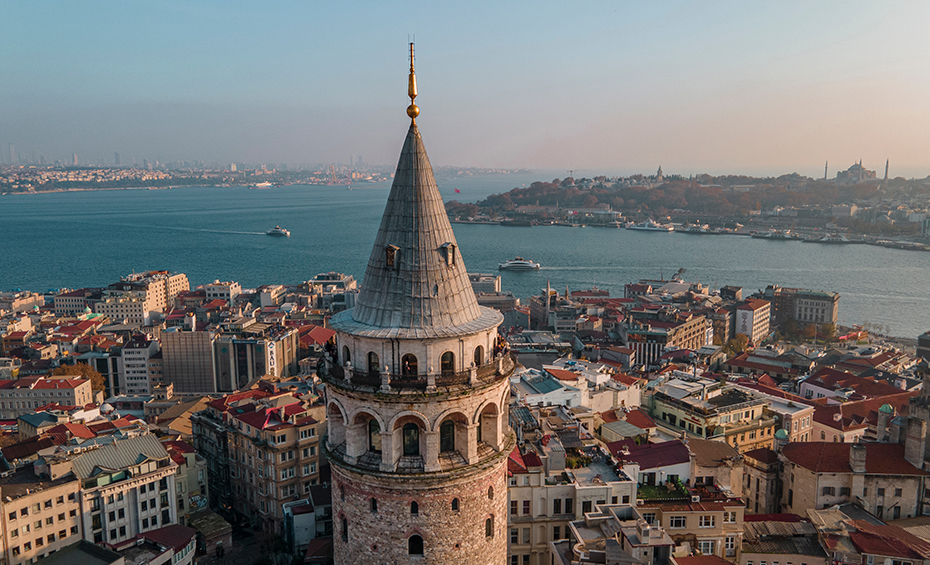
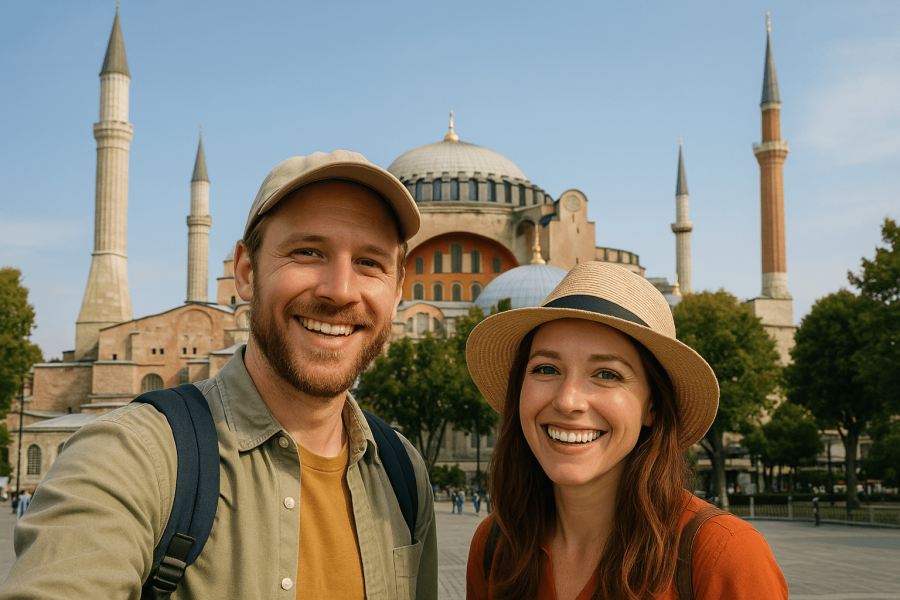
This is the classic first-time route and one of the best choices for travelers who want Turkey’s defining cultural highlights in eight to ten days. It begins in Istanbul, where Byzantine, Ottoman, Roman, and modern Turkish life meet in a compact historic center. Visits commonly include Hagia Sophia, the Blue Mosque, Topkapi Palace, the Basilica Cistern, the Hippodrome, and the Grand Bazaar. A Bosphorus cruise adds a useful perspective on the city’s European and Asian shores.
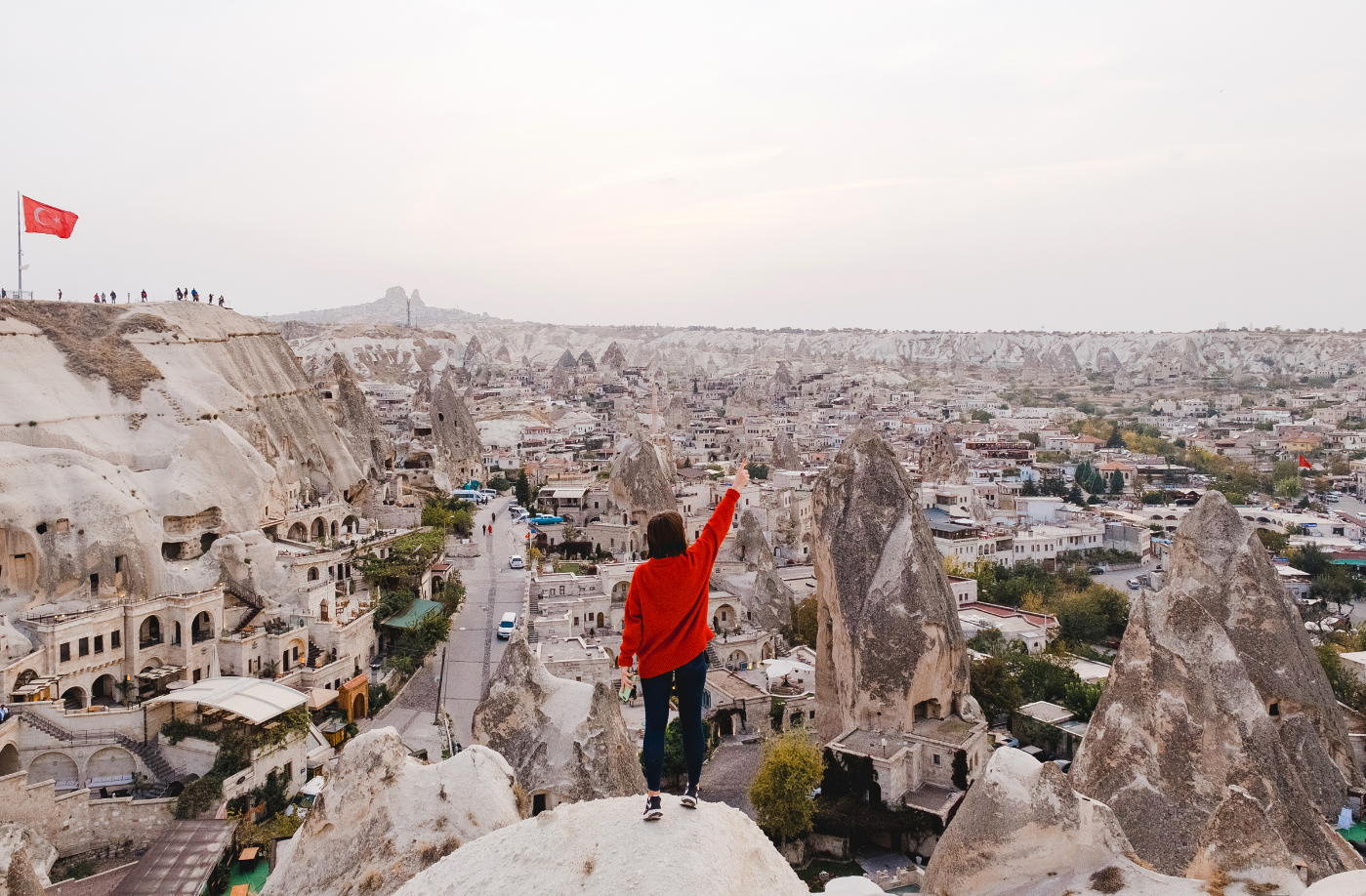
From Istanbul, a domestic flight to Cappadocia avoids a long overland transfer. The region’s cave churches, frescoes, underground cities, and valleys reveal a different chapter of Anatolian history. Goreme Open-Air Museum is especially valuable for travelers interested in early Christian heritage, while a sunrise hot air balloon flight offers the region’s most memorable landscape view. Ballooning is weather dependent, so it should be treated as a highlight rather than the sole purpose of the visit.
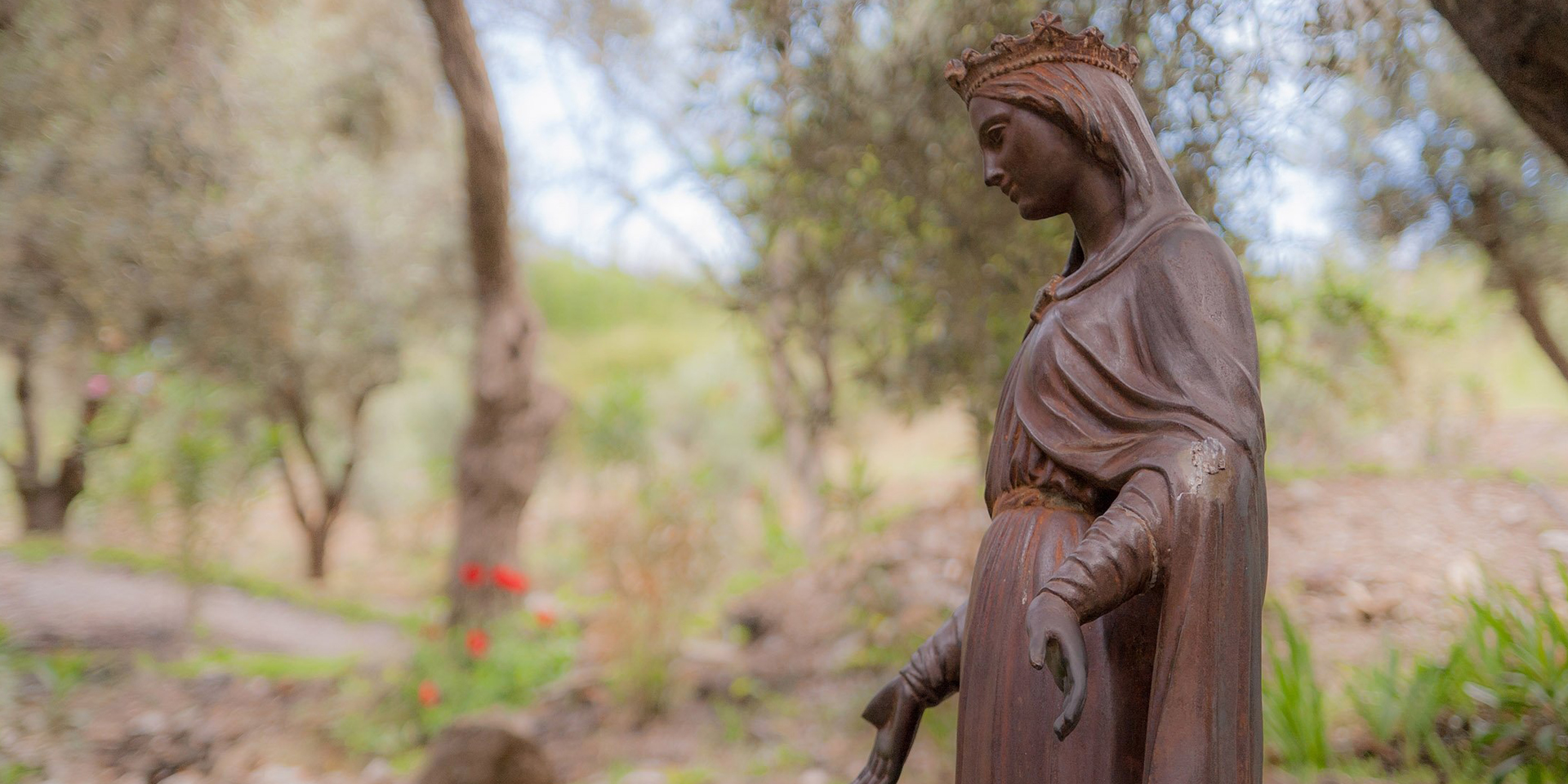
The route then continues to Izmir or Kusadasi for Ephesus. This is where the scale of Roman Asia Minor becomes clear: the Marble Road, Great Theater, Terrace Houses, Curetes Street, and Library of Celsus are not isolated ruins but parts of a once-thriving port city. Nearby, the House of the Virgin Mary and Basilica of St. John add meaning for Christian travelers.
Pamukkale works naturally as the final stop. Its white travertine terraces are striking, but the larger heritage story is ancient Hierapolis, with its theater, necropolis, baths, and early Christian associations. This route is efficient because flights handle the long distances while each destination delivers a distinct experience – imperial Istanbul, volcanic Cappadocia, Roman Ephesus, and the thermal landscape of Pamukkale.
Best Turkey Heritage Routes for Ancient History
Travelers whose priority is archaeology should add the northern Aegean to their itinerary. A route linking Istanbul, Gallipoli, Troy, Pergamon, Ephesus, and Pamukkale creates a strong chronological journey through legendary, Hellenistic, Roman, and Byzantine eras.
Gallipoli is not an ancient site, but it is essential for many American and international visitors who want to understand the First World War campaign. The preserved cemeteries, memorials, landing beaches, and battlefields are best visited with a guide who can explain the terrain and the human scale of the conflict. It is a reflective day rather than a conventional sightseeing stop.
Troy, across the Dardanelles, brings a different kind of history. Its value is not that it recreates the Homeric story exactly, but that it shows layer upon layer of settlement spanning thousands of years. Travelers expecting a single intact city may be surprised by the archaeological landscape. With the right interpretation, however, Troy becomes far more compelling than a quick photograph beside the replica horse.
Pergamon adds another major chapter, particularly its acropolis, steep theater, and Asklepion healing center. It is a worthwhile addition for travelers with ten or more days, though it makes the itinerary more active. Those with limited time should choose between Pergamon and an extra night in Istanbul or Cappadocia rather than crowding every site into the schedule.
Route Three: The Seven Churches and Biblical Turkey
A biblical heritage route is one of the most meaningful ways to experience western Turkey. The Seven Churches of Revelation – Ephesus, Smyrna, Pergamum, Thyatira, Sardis, Philadelphia, Laodicea, and the nearby setting of Hierapolis – are located across the Aegean region. They are best experienced as a dedicated five- to seven-day program, often paired with Istanbul before or after the tour.
Ephesus is usually the emotional center of the journey, but the lesser-known sites give the route its depth. Sardis preserves a large synagogue, gymnasium, and temple complex. Laodicea offers extensive excavations and a strong sense of the city described in Revelation. Pergamum provides dramatic views and a setting that helps visitors picture the religious and civic pressures faced by the early Christian community.
For groups following the journeys of St. Paul, routes can extend to Antioch, Tarsus, Perge, Pisidian Antioch, and the Mediterranean coast. These programs require careful planning because the sites are spread across southern and central Turkey. They work best with a private guide or a specialist group itinerary, especially when lecture time, worship opportunities, or an experienced faith-tour leader are part of the trip.
A Deeper Route Through Mesopotamia
Southeastern Turkey is the right choice for repeat visitors and travelers ready to move beyond the familiar highlights. The region around Sanliurfa, Mardin, Gaziantep, and Adiyaman contains some of the oldest and most layered heritage landscapes in the country.
Gobeklitepe, near Sanliurfa, has changed how archaeologists discuss early ritual and settlement. Its monumental stone pillars predate agriculture on a scale that makes the site difficult to absorb in a single visit. Sanliurfa itself adds the Pools of Abraham, the archaeological museum, and a lively regional culture shaped by long-standing trade routes.
Mardin’s honey-colored stone architecture and hillside setting offer a different atmosphere from the Aegean coast. Nearby monasteries and ancient settlements reflect Syriac Christian heritage, while Gaziantep is known for the Zeugma Mosaic Museum and one of Turkey’s most celebrated food traditions. Mount Nemrut, with its colossal summit statues, is another extraordinary extension, although the drive and early start required for sunrise or sunset make it better suited to travelers comfortable with a more demanding schedule.
This route is not ideal for a first seven-day trip. It becomes exceptional when added to a 12- to 15-day private itinerary or combined with Istanbul and Cappadocia by domestic flight. The reward is a more complete view of Turkey as a crossroads of civilizations rather than a collection of famous postcard sites.
Build a Route That Leaves Room for the Experience
A heritage itinerary succeeds when travel days do not overwhelm the places you came to see. Plan at least three nights in Istanbul, two or three in Cappadocia, and two near Ephesus when those destinations are included. One-night stays can work at transit points, but repeated packing and early departures quickly reduce the value of even the most famous landmarks.
Consider the season before confirming the route. April through May and September through October are especially comfortable for archaeological touring. Summer brings long daylight hours and a lively atmosphere, but Ephesus, Pamukkale, and southeastern sites can be very hot. Winter offers quieter museums and attractive Istanbul stays, though Cappadocia balloon flights and some outdoor sightseeing are more vulnerable to weather changes.
Smart Turkey Tours can help match the right heritage route to your available days, preferred pace, and interests, with guided sightseeing and domestic transportation arranged around the destinations that matter most to you. Leave room in the plan for an unhurried tea overlooking the Bosphorus, a conversation with your guide, or an extra hour among the stones of Ephesus. Those are often the moments that turn a well-organized route into a journey you remember for years.