
Turkey holds more than a collection of ancient ruins. It is a living crossroads where Greek, Roman, Byzantine, Ottoman, Hittite, and early Christian worlds meet across one remarkably varied landscape. A well-planned Turkey archaeology tour itinerary lets you experience those layers in the right order, without spending valuable vacation days untangling domestic flights, long road transfers, hotel changes, and site schedules.
For most first-time visitors, 10 days offers the best balance of major archaeological landmarks, comfortable pacing, and time to appreciate what you are seeing. This route combines Istanbul’s imperial heritage with the battlefields of Gallipoli, legendary Troy, the classical cities of western Anatolia, and the underground settlements and rock-cut churches of Cappadocia.
Why a 10-Day Archaeology Route Works
Turkey is a large country, and its archaeological treasures are spread across several regions. Trying to visit Istanbul, Ephesus, Pamukkale, and Cappadocia entirely by road can turn a cultural journey into a series of exhausting travel days. A thoughtfully arranged itinerary combines private transfers with domestic flights where they save meaningful time.
This particular route follows a natural west-to-east progression. You begin in Istanbul, travel through the historic Dardanelles region, continue south along the Aegean coast, and then fly to central Anatolia. It gives you the headline sites while leaving room for the details that bring ancient places to life: a worn marble street, an original theater seat, a Roman bath complex, or a cave chapel painted more than a thousand years ago.
Days 1-2: Istanbul’s Imperial Foundations
Begin your journey in Istanbul, the city once known as Byzantium and Constantinople. While it is not an excavation-focused destination in the same way as Ephesus or Troy, it provides essential context for the civilizations you will encounter throughout Turkey.
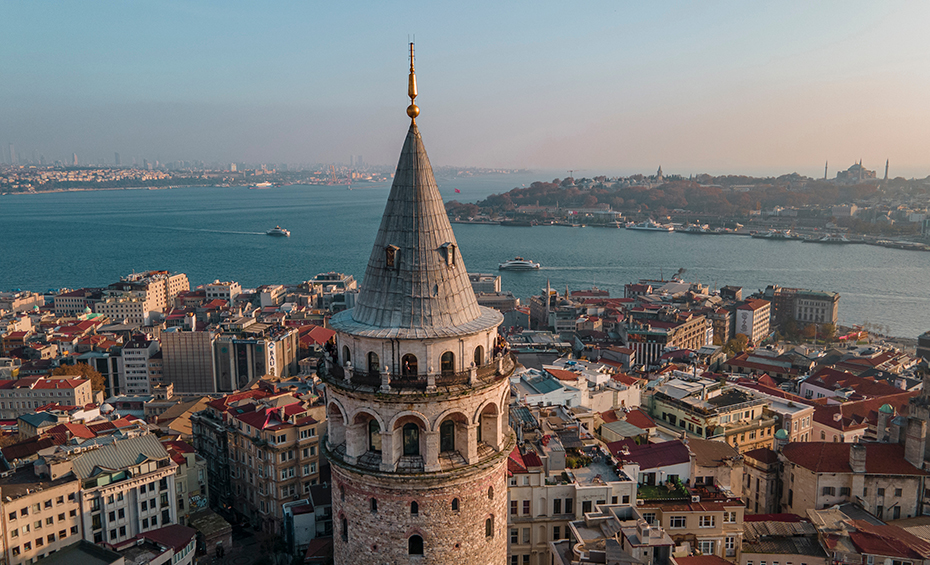
On your first day, settle into your hotel and take time to adjust after your international flight. Depending on your arrival, an evening stroll through Sultanahmet offers an immediate sense of place, with the domes and minarets of the historic peninsula rising above the old city.
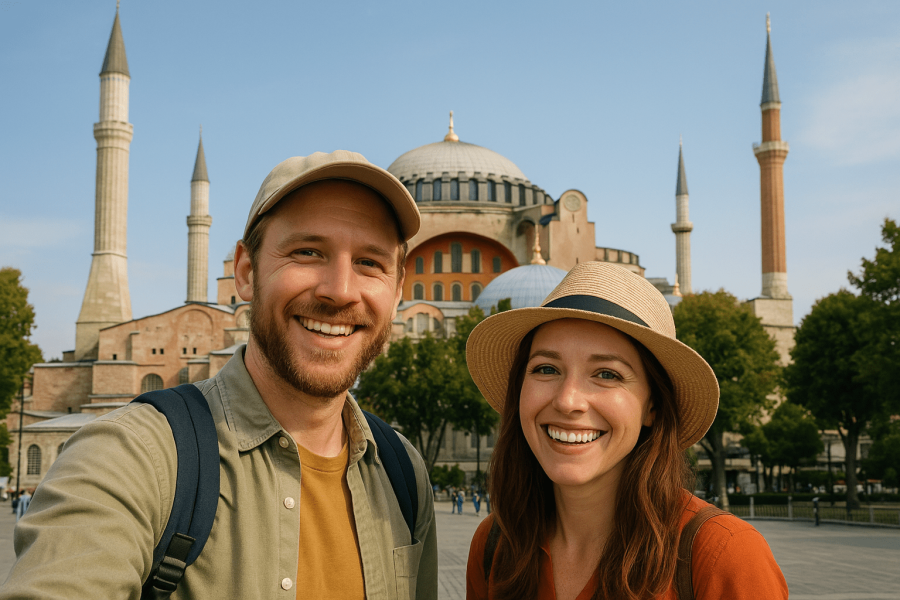
Your second day should focus on the great monuments of the Byzantine and Ottoman capitals. Hagia Sophia reveals the scale and ambition of the Byzantine Empire, while the Basilica Cistern preserves a striking piece of ancient urban infrastructure beneath the streets. Topkapi Palace and the Blue Mosque add the Ottoman chapter, helping travelers understand how Istanbul continued to shape history long after the Roman era.
A private guide is especially valuable here. Istanbul’s landmarks are visually impressive on their own, but their true significance lies in how empires reused, transformed, and built upon the same strategic peninsula over nearly two millennia.
Day 3: Gallipoli and Ancient Troy
Travel west toward the Gallipoli Peninsula, crossing into the region where the Aegean meets the Dardanelles. Gallipoli is best known for the World War I campaign, and its memorials, cemeteries, and battlefields add a moving modern-historical dimension to an archaeology-focused trip.
After visiting key sites such as Anzac Cove, Lone Pine, and Chunuk Bair, continue toward Çanakkale. The drive places you near ancient Troy, a city whose name has captured imaginations for centuries.
An overnight in Çanakkale keeps the next morning relaxed and avoids rushing one of Turkey’s most famous archaeological experiences. The waterfront city is also a pleasant base, with views across the Dardanelles and easy access to the ruins.
Day 4: Troy, Pergamon, and the Aegean Coast
Visit Troy in the morning, where multiple cities were built one on top of another over thousands of years. The site is more subtle than visitors sometimes expect. Its value is not in one intact monumental structure but in the archaeological evidence of repeated settlement, conflict, trade, and rebuilding from the Bronze Age onward.
A knowledgeable guide makes a real difference at Troy, explaining the distinct layers of occupation and separating Homeric tradition from what archaeology can confidently establish. The reconstructed wooden horse is a popular photo stop, but the excavation areas are the heart of the visit.
Continue south to Pergamon, one of the ancient world’s great centers of culture, learning, and healing. Its dramatic acropolis sits high above the modern town of Bergama, with commanding views across the surrounding plains. Highlights include the steep theater, the Temple of Trajan, and the remains of the famous library complex.
The day involves a substantial drive, so an organized private transfer or small group arrangement is particularly helpful. Continue to İzmir or Kusadasi for the night, positioning yourself for Ephesus the following morning.
Day 5: Ephesus and the Ancient World at Its Best
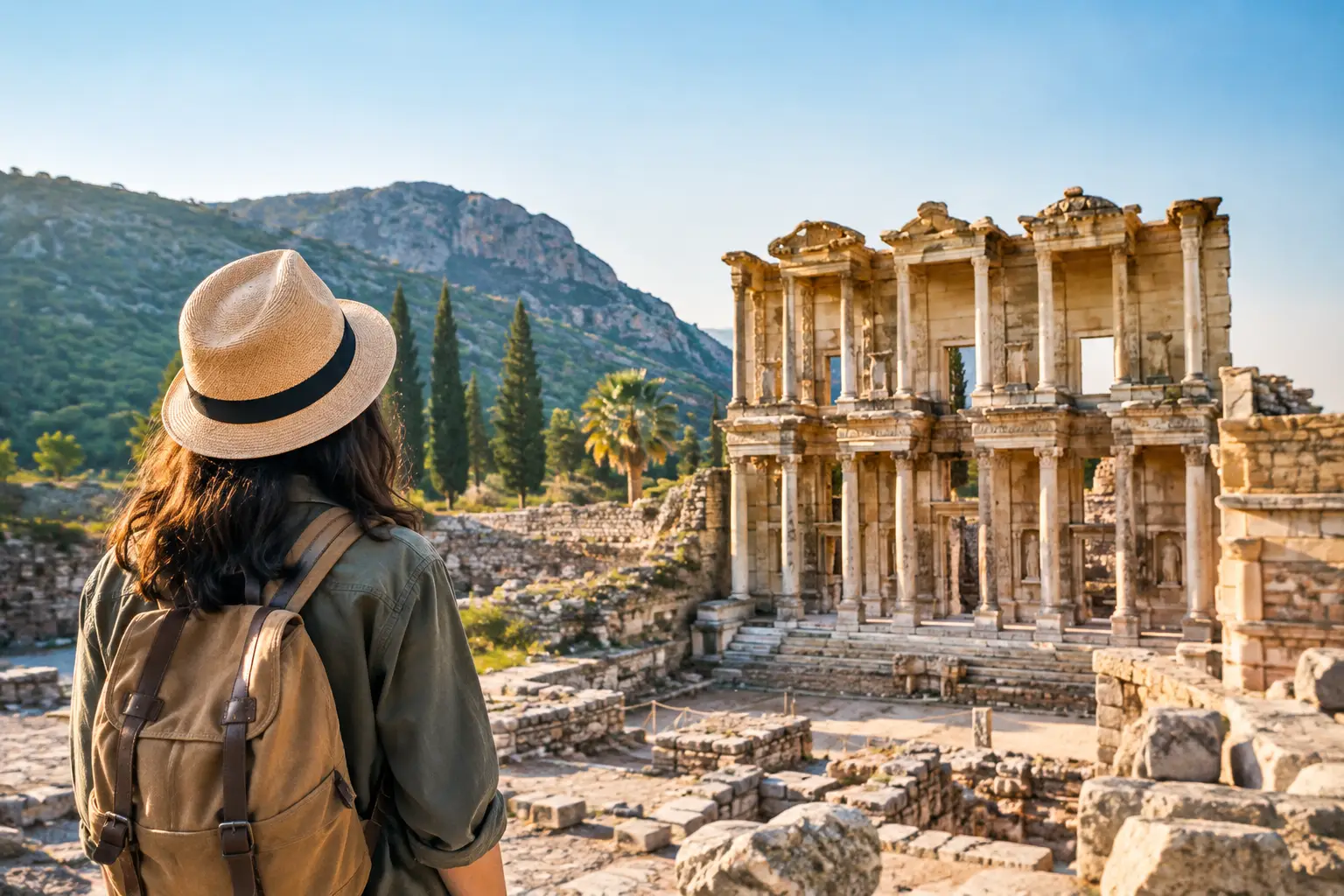
Ephesus is the centerpiece of many Turkey archaeology itineraries, and rightly so. Few sites in the Mediterranean offer such a clear sense of an ancient city’s scale. As you walk down Curetes Street toward the Library of Celsus and the Great Theater, it is easy to picture the civic, commercial, and religious life that once filled these avenues.
Allow enough time to visit the Terrace Houses, where excavated residences reveal mosaics, wall paintings, and sophisticated domestic design. This optional section requires extra time and a separate admission, but it is often one of the most rewarding parts of the site for travelers interested in daily life rather than public monuments alone.
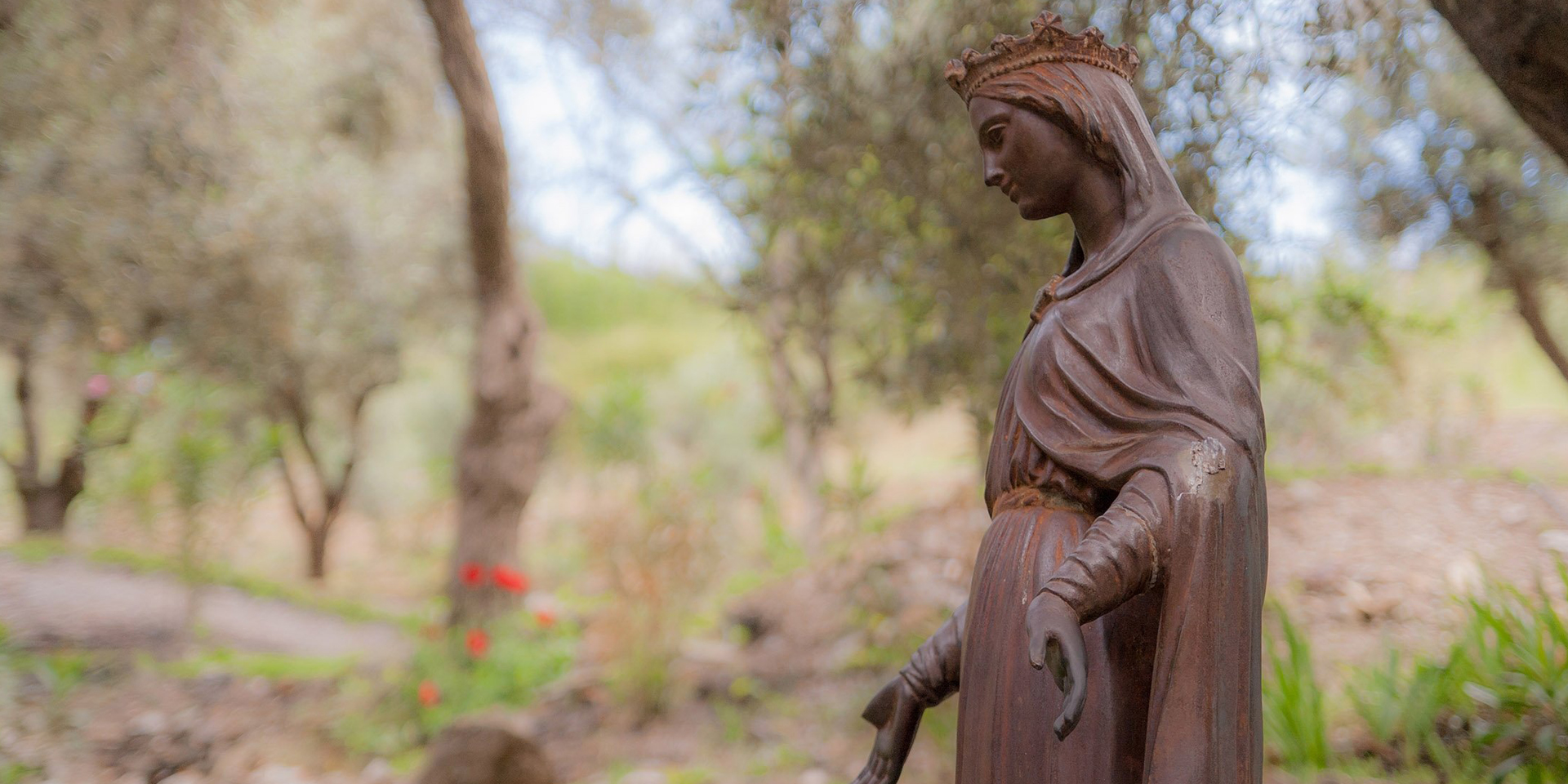
The nearby House of the Virgin Mary and the Basilica of St. John can be added based on your interests. Faith-based travelers often choose both, while guests with a strictly classical focus may prefer more time inside Ephesus and at the Ephesus Archaeological Museum in Selçuk.
Day 6: Aphrodisias and Pamukkale
Leave the Aegean coast for inland Anatolia, stopping at Aphrodisias if your schedule allows. Less crowded than Ephesus, this exceptionally preserved city is a favorite among serious archaeology enthusiasts. It is known for its stadium, temple, theater, agora, and sculpture school, whose artists were celebrated across the Roman world.
Continue to Pamukkale, where white mineral terraces cascade down the hillside above the ancient city of Hierapolis. The combination of natural scenery and Roman ruins makes this stop distinct from the coastal sites. Walk through the necropolis, see the theater, and visit the ancient thermal pools that attracted visitors for healing purposes nearly two thousand years ago.
An overnight in Pamukkale gives you the opportunity to see the terraces at a quieter time of day. Travelers who want a lighter schedule can skip Aphrodisias and devote more time to Hierapolis. Those who enjoy smaller, less commercialized excavation sites should keep Aphrodisias firmly on the itinerary.
Days 7-9: Cappadocia’s Rock-Cut Heritage
Fly from Denizli to Cappadocia, usually via Istanbul, rather than attempting the long cross-country drive. The flight connection is one of the clearest examples of why a professionally coordinated itinerary saves time and energy.
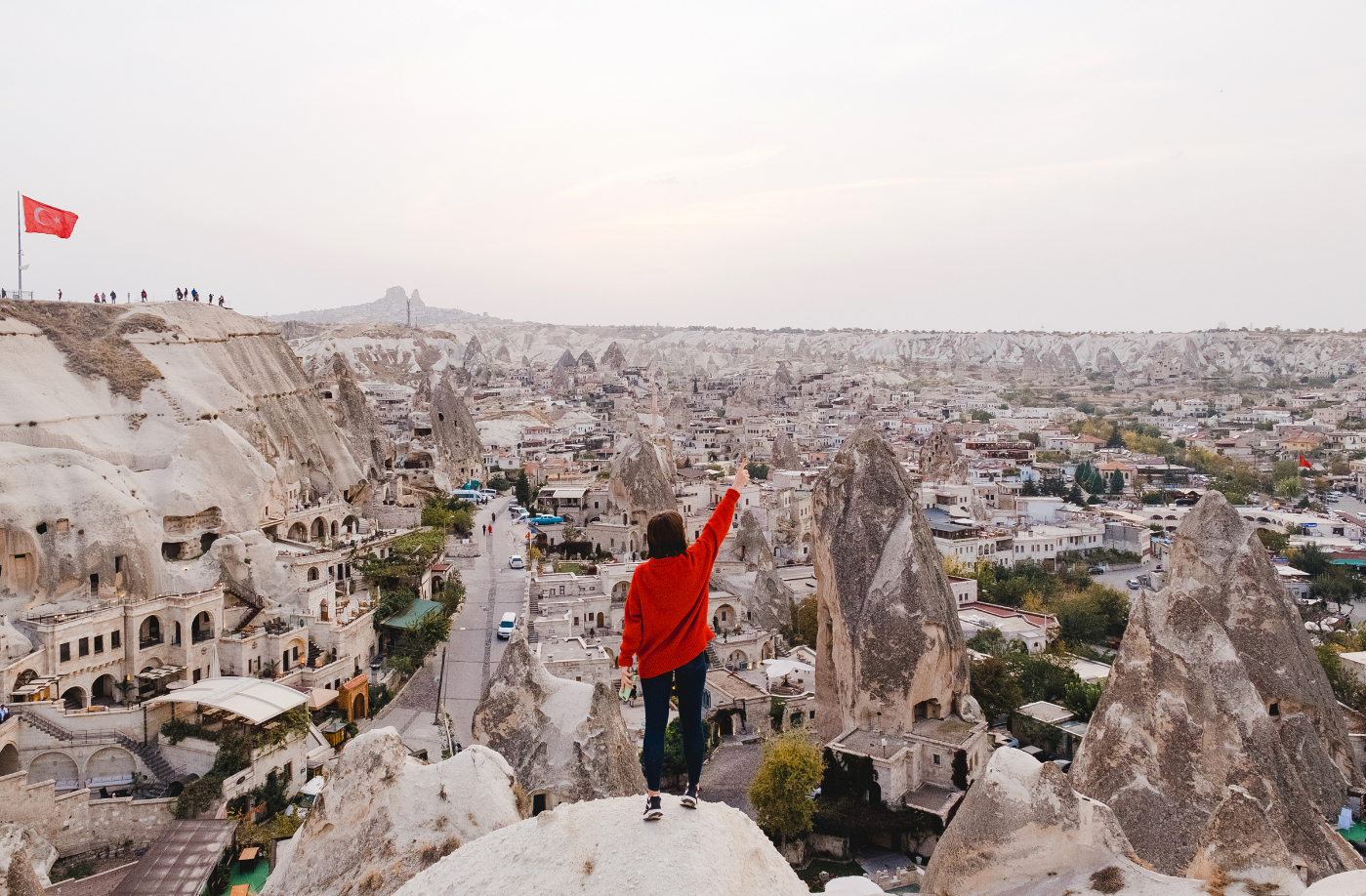
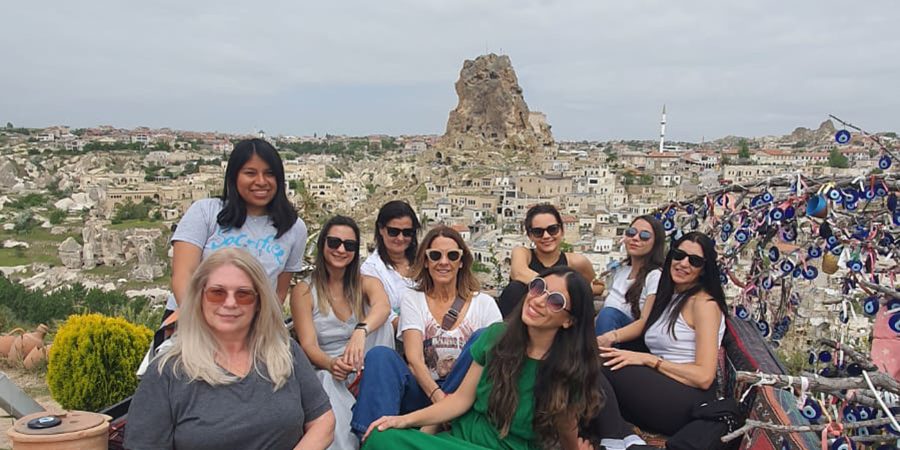
Cappadocia’s archaeological story is different from the grand marble cities of the Aegean. Here, soft volcanic rock allowed communities to carve homes, churches, monasteries, storerooms, and entire underground settlements directly into the landscape.
Spend one day in the Göreme Open-Air Museum, where rock-cut churches preserve frescoes from the Byzantine period. Another day can include the underground city of Kaymakli or Derinkuyu, along with the pottery town of Avanos and the valleys around Uçhisar. These sites show how people adapted to a demanding environment and created a remarkable defensive and religious landscape.
A sunrise hot air balloon flight is not an archaeological visit, but it is a memorable way to understand Cappadocia’s geography. It is weather dependent, so plan it for your first available morning and keep a second morning open when possible.
Day 10: Return to Istanbul and Depart
Fly back to Istanbul for your international departure, or add an extra night if your flight schedule requires it. A final evening in the city is a welcome chance to enjoy Turkish cuisine, shop for ceramics or textiles, and reflect on the extraordinary distance covered across Anatolia.
Practical Planning for Your Turkey Archaeology Tour Itinerary
The ideal travel season is generally April through May or September through October, when temperatures are more comfortable for long outdoor site visits. Summer offers reliable sunshine but can be very hot at Ephesus, Troy, Pergamon, and Pamukkale, where shade is limited. Winter is quieter and can be rewarding, although weather may affect balloon flights and some travel connections in Cappadocia.
Wear supportive walking shoes with a good grip. Ancient streets are often uneven, polished by centuries of use, and sometimes steep. A hat, refillable water bottle, sunglasses, and a light layer for mornings and evenings will serve you well across most regions.
For travelers who want history without logistical pressure, Smart Turkey Tours can tailor this route around private guides, selected hotels, domestic flights, and pickup arrangements. The right pacing matters as much as the destinations. Give each ancient city time to speak for itself, and Turkey’s past becomes far more than a list of ruins.