
Few day trips in Turkey carry the emotional weight and historical range of a Gallipoli and Troy tour. In a single route, travelers move from the battlefields and memorials of Gallipoli to the legendary world of Homeric Troy, covering centuries of history in a way that feels surprisingly connected once you are on the ground.
For many US travelers, these two destinations are high on the list for different reasons. Gallipoli is personal, reflective, and deeply tied to modern history. Troy is older, more mythic, and shaped by archaeology as much as literature. Put them together, and you get a tour that balances remembrance with discovery, which is exactly why this itinerary works so well as a guided experience.
Why Discover Gallipoli and Troy?
On the map, Gallipoli and Troy make sense together. Both are in northwestern Turkey, and both fit naturally into broader Turkey itineraries that include Istanbul, Ephesus, Pergamon, or even Cappadocia with domestic flights added. In practical terms, combining them saves time and reduces the stress of arranging separate transfers, site entry timing, and local guiding.
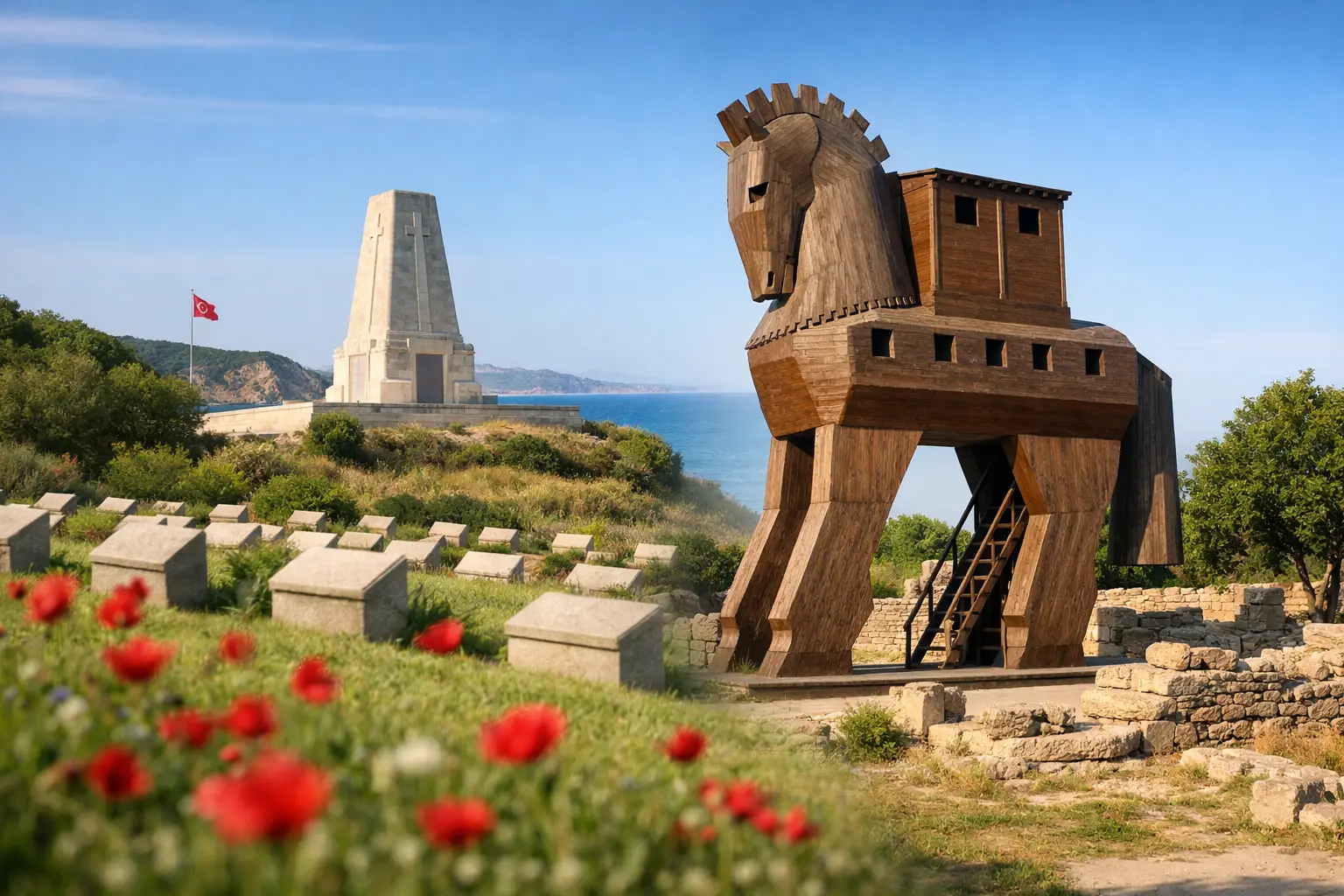
More importantly, the pairing creates contrast. Gallipoli is centered on the events of World War I, with preserved trenches, cemeteries, memorials, and viewpoints that help visitors understand the scale and cost of the campaign. Troy offers a completely different lens, where myth, excavation, and layered civilizations come together in one archaeological site. Travelers often come away surprised that the day does not feel repetitive. It feels fuller.
This is also a route where expert guiding matters. At Gallipoli, context changes everything. The names on memorials, the geography of the landing beaches, and the meaning of places like ANZAC Cove or Lone Pine are far more powerful when explained clearly. At Troy, a guide helps bridge the gap between ruined walls and the story most people know from school, books, or film.
What you will usually see on a Gallipoli and Troy tour
Most itineraries are structured around the key landmarks travelers should not miss. At Gallipoli, visits commonly include ANZAC Cove, Brighton Beach, Lone Pine Cemetery, Chunuk Bair, the Nek, and several commemorative memorial sites. Each stop adds a different piece of the story, from military strategy to personal sacrifice to the long memory of the campaign.
At Troy, the focus shifts to the archaeological site itself. Travelers typically see the ancient city walls, excavation areas from different settlement layers, the remains of temples and public spaces, and the symbolic wooden horse associated with Troy’s popular image. A strong guide will explain what is original, what is reconstructed, and how historians and archaeologists interpret the site today.
Some itineraries also include the Troy Museum area or additional stops in Canakkale, depending on timing and tour style. That can be a real advantage if you want a broader understanding of the region rather than just a quick site visit.
Is this best as a day tour or an overnight trip?
It depends on where you are starting and how much pace you are comfortable with. If you are beginning in Istanbul, a full-day option can be possible, but it is usually long and better suited to travelers who do not mind early departures and extended road time. For visitors who want a more comfortable rhythm, an overnight itinerary often makes better sense.
An overnight format allows more breathing room at the sites and usually improves the overall experience. You are not rushing through Gallipoli with one eye on the clock, and Troy feels less like a box to check. This matters especially for couples, families, and travelers with a strong interest in military history or archaeology.
For broader Turkey itineraries, Gallipoli and Troy also fit well as part of a multi-day route moving south toward the Aegean. That kind of planning is often the smartest option if you are already visiting Istanbul, Ephesus, Pamukkale, or Pergamon and want to connect the stops efficiently.
What kind of traveler enjoys this route most?
A Gallipoli and Troy tour appeals to more than history buffs. Yes, military history travelers and archaeology enthusiasts tend to love it, but the route also works well for first-time visitors who want a meaningful day outside the major city centers. It is one of those rare tours that combines storytelling, scenery, and substance.
Families with older children often find it especially rewarding because the sites bring schoolbook history to life. Couples appreciate the balance between structured sightseeing and reflective moments. Private travelers like the flexibility to move at their own pace, while small group travelers often enjoy hearing different perspectives during the day.
That said, this route is less about shopping, leisure stops, or light sightseeing. It is a destination choice for travelers who want depth. If your priority is a relaxed coastal day or a resort-style excursion, this may not be the best fit. If you want a day that feels memorable for what you learned and felt, it is a very strong choice.
How to plan the right Gallipoli and Troy tour
The best starting point is your overall Turkey itinerary. If Gallipoli and Troy are stand-alone priorities during an Istanbul stay, look closely at transfer times and whether the schedule includes enough on-site guiding. If they are part of a longer trip, consider how they connect with nearby destinations so you avoid backtracking.
Tour style matters too. A private tour is ideal for travelers who want flexibility, a more personalized pace, and direct access to their guide for questions. Small group tours are often a great middle ground, offering organized logistics and value while still keeping the experience focused. Larger bus-style formats may be more budget-friendly, but they can feel less personal at sites where reflection and explanation are important.
You should also pay attention to what is included. Transportation, professional guiding, entrance fees, lunch, and hotel pickup can make a major difference in convenience and total trip cost. For US travelers planning from abroad, this is where working with a specialized Turkey operator becomes valuable. A well-managed itinerary removes the guesswork from a route that would otherwise require multiple moving parts.
Seasonal timing and practical expectations
Spring and fall are often the best seasons for this route. The weather is generally more comfortable for walking outdoor sites, and the experience tends to feel more pleasant overall. Summer is certainly possible, but midday heat can make open-air battlefield and archaeological visits more tiring than some travelers expect.
Good walking shoes are essential. Gallipoli and Troy are not difficult sites in a technical sense, but they do involve uneven ground, open areas, and time spent outdoors. Bringing water, sun protection, and a light layer for changing conditions is a smart move.
Emotionally, Gallipoli deserves a different mindset than a standard sightseeing stop. Many travelers find the memorials and cemeteries deeply moving. It is not a place to rush. Troy, by contrast, rewards curiosity. The site can look understated at first glance, but once the layers are explained, it becomes far more compelling.
Why guided travel makes a difference here
This is one of those routes where planning support is not just convenient. It genuinely improves the trip. Distances, timing, historical interpretation, and regional coordination all matter. When arranged well, the day feels coherent and purposeful. When arranged poorly, it can become a lot of road time with too little insight.
That is why travelers often choose a specialist such as Smart Turkey Tours for this kind of itinerary. The value is not only in transportation from point A to point B. It is in structuring the route correctly, matching the right format to your schedule, and making sure the experience feels informed rather than rushed.
A well-designed Gallipoli and Troy tour does more than connect two famous names on a map. It gives shape to a region where memory, legend, and history all meet. If you are building a Turkey trip that should feel both meaningful and manageable, this is one route worth planning carefully.
For visitors who would like to learn more about the memorial sites and historical significance of the region, the official Gallipoli Historical Site Directorate offers detailed information about the Gallipoli Peninsula and its preserved landmarks.